Professional Website Development in Iraq Before Winter
Why Iraqi businesses need a professional website before winter: launch timing, Arabic-first design, mobile speed, and build choices for Baghdad owners.
Published
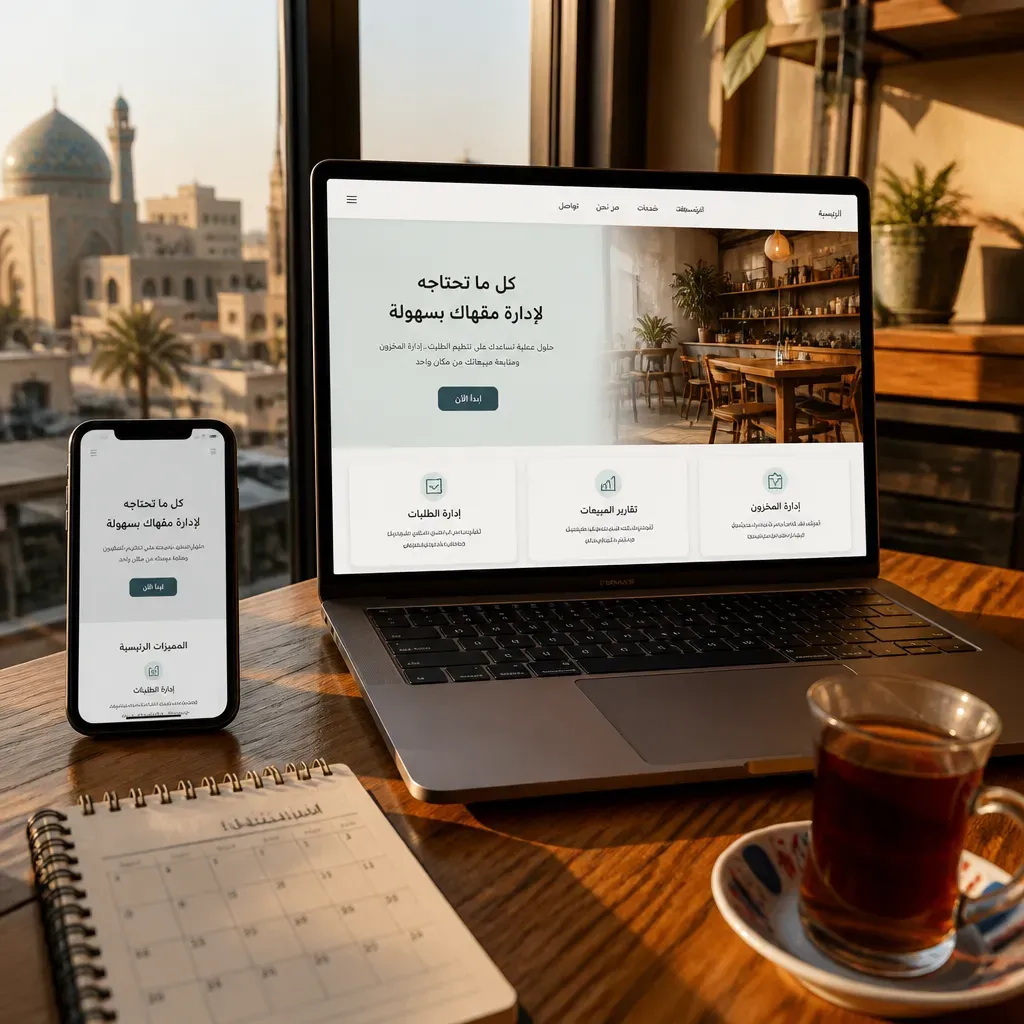
Website development in Iraq tends to be scheduled after a business feels settled, which usually means after customers have already formed their first impression elsewhere. A person searching for a clinic, a gym, or a school in Baghdad decides within seconds whether the listing looks current, loads on a mobile connection, and answers the questions they actually have about hours, prices, and location. The months before the colder season are when many businesses run enrollment drives, seasonal offers, and event bookings, so the site must be live and accurate before that traffic arrives. This article covers what a professional site has to do, where small business sites most often fail, and how to choose a build approach that still works after launch.
Table of Contents
- Quick Takeaways
- What the Pre-Winter Window Actually Demands
- Where Small Business Sites Lose Customers
- Arabic-First Layout and Mobile Performance
- Choosing a Build Approach for a Local Business
- Custom Business Systems After the Site Goes Live
- Guest Web Experiences for Venues via QR Code
- Frequently Asked Questions
- References
Quick Takeaways
| Key Insight | Explanation |
|---|---|
| Treat the launch date as a deadline | A site that goes live two to three weeks before a seasonal push has time for indexing checks, real-device testing, and corrections to Arabic copy. A site started in the week of a campaign rarely gets that time. |
| Arabic and English need separate layout decisions | Right-to-left Arabic requires its own type scale, line height, and mirrored navigation. Translating English copy into an existing layout is the most common cause of broken Arabic pages. |
| Set a page weight budget before design begins | Cap the transferred weight of a standard service page at about 1.5 MB and measure it on a mid-range Android device over a throttled connection before sign-off. |
| Put hours, prices, and location in live text | Visitors who cannot confirm these three items in the first viewport usually leave or call elsewhere. Text inside an image or a PDF menu is not indexed and often does not render on slow networks. |
| Require a non-developer editing path | A site that depends on one freelancer for every change will be out of date within a quarter. Require role-based content editing before accepting the build. |
| Define one primary action per page | Name the action each page exists to produce, such as a call, a booking, or a QR scan, and track that event from the first day of launch. |
| Assign renewal ownership in writing | Domain renewal, SSL certificate renewal, and software updates cause most avoidable downtime after launch. Each one needs a named owner and a calendar reminder at least 30 days before expiry. |
What the Pre-Winter Window Actually Demands
The practical question is not whether a business needs a website, but when the site has to be production-ready to matter for a seasonal demand peak. A site launched during a campaign week competes with that campaign for attention and for the team’s time. The better sequence is to launch in a quiet period, verify the site under real conditions, and only then direct paid or organic traffic into it.
Working backward from the demand peak
Start from the date demand begins, not the date your designer is available. A clinic that takes bookings for seasonal checkups, or a school that runs enrollment through autumn, needs the site indexed and stable before the first push. In practice, we schedule the content freeze, the staging review, and the mobile test pass in that order, and we treat any change request after the freeze as a post-launch item.
Content that has to exist on day one
Three things are required before launch: a dedicated service page for each revenue line, a contact method that works on a phone, and an accurate location with a map link. Many sites go live with a homepage and a gallery and nothing else, which forces every search visitor to guess. A simple test is whether a visitor can answer “what does it cost and how do I get there” without leaving the page.
Where Small Business Sites Lose Customers
Most failures are not visual. They are structural: pages that search engines cannot read, pages that break on a phone, and pages that cannot be changed without calling a developer. Each of these failures looks minor in isolation, but together they remove the enquiries the site was built to receive.
Discovery fails when the site has no indexable text
A site whose content sits in images, embedded social feeds, or script-rendered panels gives search engines very little to index. For a Baghdad clinic or retailer, that means the business name, the service names, and the district are never connected to the queries real customers type. Write every service as HTML text, and build page titles that name the service and the city together, in Arabic and English where the audience searches in both.
Trust signals are checked before the phone call
Visitors judge credibility from the address, the phone number, and the date of the most recent update. A footer that shows an outdated copyright year and a contact form that returns an error tells the visitor that nobody is maintaining the business. SCORE’s guidance on small business websites frames credibility and reach as the two core reasons to have one, and the credibility half is decided mostly by these small details.
A website that cannot be updated in an afternoon is already out of date on the day it launches.
The contact path has to match the device
Phone-first visitors tap a number, open a map link, or send a message from the same screen. A form that requires a desktop keyboard, a captcha that fails in a mobile browser, or a map embed that stalls on a slow network removes a real enquiry at the moment of intent. Test the full path on a mid-range Android phone before launch, since that device class represents a large share of the visitors most local businesses receive.
Arabic-First Layout and Mobile Performance
Arabic-first design is a layout discipline, not a translation task. When an interface is built for right-to-left reading from the start, navigation order, form fields, numerals, and card alignment follow the same logic. When Arabic is added afterward, mirrored icons, left-aligned figures in price lists, and truncated labels appear in places the English layout never tested.
Typography and line height for Arabic script
Arabic letterforms connect and change shape depending on their position in a word, so a font subset that omits the required shaping features will render broken or disconnected glyphs. Use a font that includes Arabic presentation forms, verify that the subset covers them, and set a larger line height for body text than you would use for Latin text at the same size. Test headings at their longest realistic length in both languages, since the two often differ considerably in width.
Page weight on mobile connections
Set the page weight budget before design starts, and measure it against the landing page. A workable limit for a standard service page is under 1.5 MB transferred, with hero images served as WebP or AVIF at the rendered size and no autoplaying video above the fold. Each third-party script, whether analytics, live chat, or a map, should justify its load time against the conversion it supports.
Pro tip: Test with the browser’s network throttling set to a slow 4G profile and the cache disabled. If the first meaningful content takes more than a few seconds to appear, the cause is usually an oversized hero image or a render-blocking script, not the hosting.
Choosing a Build Approach for a Local Business
The build approach decides who can update the site after launch and what it costs to change direction later. Most decisions for local businesses in this market fall into three categories, and the trade-offs are predictable enough to plan around before the first invoice.
| Approach | Strengths | Trade-offs |
|---|---|---|
| Template-based website builder | Fast to start, low upfront cost, and a familiar editor for non-developers | Limited control over Arabic right-to-left layout, a fixed content model, and weak support for custom booking or records workflows |
| One-off freelance build | Custom visual design at a lower initial price | Frequently lacks a documented handover, depends on one person, and rarely includes post-launch maintenance |
| Custom build with managed content and maintenance | Arabic-first layout, a defined performance budget, and role-based editing from the start | Higher upfront scope and a requirement for a written maintenance agreement |
When a template is enough
A template is adequate for a brochure site with fewer than ten pages, no booking flow, and no internal records. The risk appears when the site has to carry Arabic layout that the template engine does not handle, or when content must be edited by several staff members with different permissions. If neither applies, the lower initial cost is a legitimate choice.
When the business needs a custom build
A custom build is the lower-risk path once appointments, enrollment, offers, or customer records must live inside the site. The extra scope pays off when the same data feeds the public pages and the internal tools, because a price changed in one place then updates everywhere. Agree on the maintenance terms in the same contract as the build, not in a separate conversation after launch.
Custom Business Systems After the Site Goes Live
A website that only publishes information stops being useful once orders, bookings, or customer records move into chat threads and spreadsheets. Custom business systems are worth building when they start from the daily workflow: who takes an order, who approves a discount, and who is allowed to see a customer record.
Roles and permissions before features
Define roles before designing any screen. A receptionist at a clinic needs booking access without billing totals, and a café shift lead needs to activate an offer without editing the menu. Permissions are easier to add than to remove without disrupting staff, so start restrictive and widen access only when a specific task requires it.
Data ownership and export
Confirm in writing who owns the data, where it is hosted, and how it can be exported. A business that cannot export its own customer list in a usable format has no real exit option if the relationship ends. This is a contract question, and it should be settled before the build starts, not at the first renewal.
Maintenance as a budgeted line item
Sustained value depends on maintenance: content reviews, security updates, backups, and tests after every change to the booking or payment path. Budget for a monthly review and name the person responsible for each task. A system without an owner degrades quietly, and staff usually discover the problem only when a customer reports it.
Guest Web Experiences for Venues via QR Code
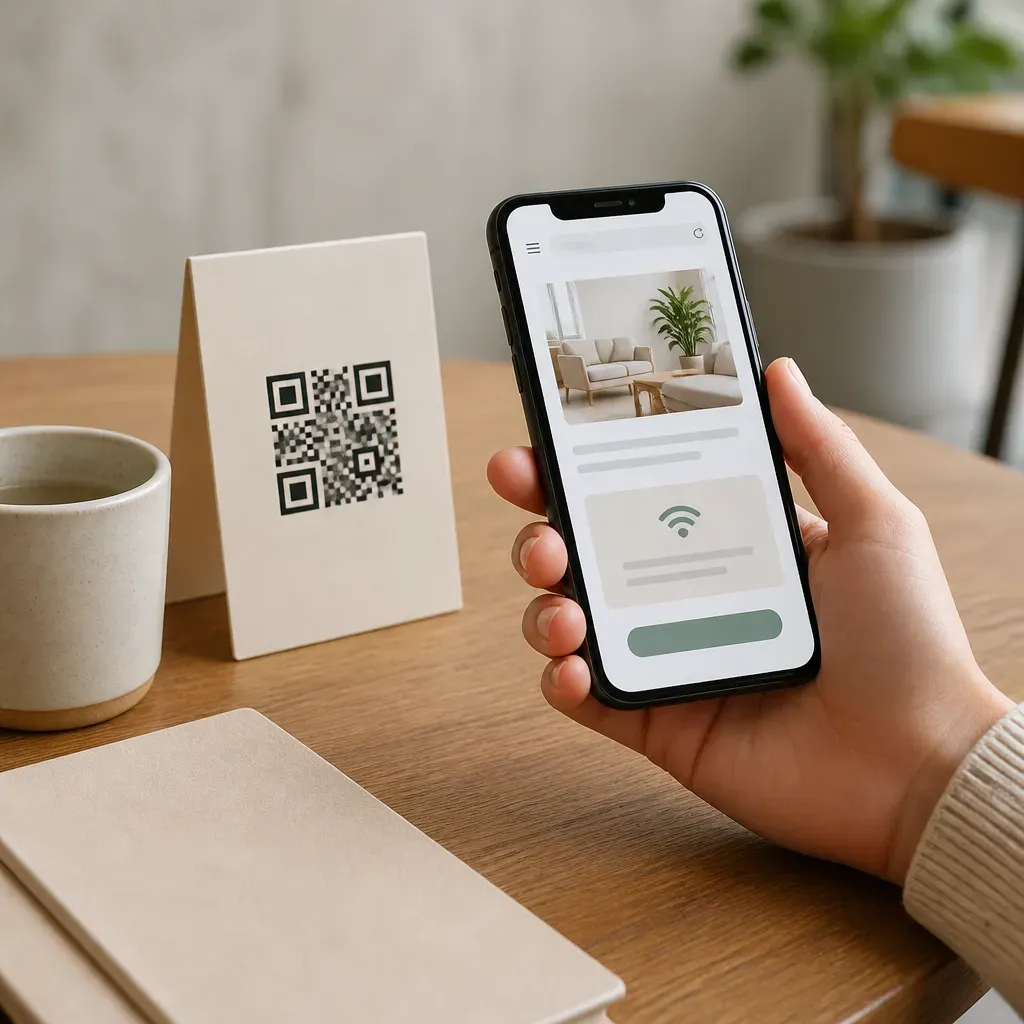
For cafés, gyms, lounges, and event venues, the website has a second job: serving guests inside the room. A QR code that opens a web experience on the guest’s own phone avoids an app download, which most guests will not complete for a single visit.

What the QR page should carry
Keep the page limited to what a guest needs during the visit: the current menu or schedule, active offers, a way to join loyalty points, and a direct call action for staff. Load time matters more here than on a marketing site, because the guest is seated in a room with variable signal and a limited window of attention.
Offers and loyalty without an app
Offers and loyalty points work when redemption takes one screen. Point balances should be tied to a phone number or another identifier the guest controls, and every offer should carry a fixed expiry date so staff can enforce it at the counter. Mizaiq OS is built around this pattern, with interactive screens inside the venue and the guest web experience on the customer’s phone, but the design principle applies to any venue tool.
Music and screens inside the venue
Interactive screens and music interaction justify their place only when they remove a decision the guest would otherwise make at the counter, such as choosing a track or confirming an offer. Drive the screens from the same offer database as the web page, so the venue never displays two different prices for the same item.
Pro tip: Generate the QR code from a short, permanent URL for each location, and print it with the table or zone it serves. A code that points to a generic homepage makes it impossible to tell which location produced a scan.
Frequently Asked Questions
How long does website development in Iraq usually take?
A single-service business site with a handful of pages can move from brief to launch in three to five weeks, provided the content is ready on day one. Timelines extend when Arabic copy is written after the design is finished, when product or venue photography is still pending, or when approvals pass through several people.
Do I need both Arabic and English versions of the site?
Build the Arabic version as the primary layout if your customers read Arabic first, then add English as a separate set of pages with its own layout checks. Maintaining two versions doubles the content workload, so decide which pages truly need both languages before the build begins.
Is a template builder enough for a clinic or a school?
A template is enough for a brochure site with fewer than ten pages and no booking, enrollment, or records workflow. Once appointments, admissions, or staff roles need to live inside the system, a custom build or a custom business system is the lower-risk path.
How often should a business site be updated?
Review hours, offers, and contact details monthly, and test the form and booking path after every change. Renew the domain and SSL certificate at least 30 days before expiry and record the dates in a shared calendar with a named owner.
How do I measure whether the website is producing customers?
Define one primary action per page, such as a call, a booking, a form submission, or a QR scan, and track it from the first day. Compare those counts with calls and walk-ins over the same period. Traffic without actions usually points to a page-level problem, not a traffic problem.
Tell us which launch decision made the biggest difference in your own experience, whether it was the build approach, the Arabic layout, or the maintenance plan.
References
-
SCORE guidance on why small businesses need a website for credibility and reach
-
Overview of how a business website gives companies a platform to share their story
-
Directory listing of web design firms operating in Iraq