Café Digital Experience in Baghdad: Fill Winter Seats
How a Baghdad café can use a QR guest experience, scoped loyalty offers, and in-venue screens to fill more seats this winter, with practical trade-offs.
Published

Many winter slowdowns get answered with blanket discounts before anyone has checked where the lost seats actually are. A café digital experience Baghdad operators can run well starts with the guest’s own phone, offers that target quiet hours, and a clear view of where a visit loses a seat. This article examines the winter seat problem through the guest journey, then looks at three mechanisms in practice: a QR-accessed guest web experience, loyalty offers scoped to empty dayparts, and in-venue screens. It also covers the trade-offs of each approach and how an in-venue experience built on ميزة OS should be scoped, given that the product is still in active development.
Table of Contents
- Quick Takeaways
- Why Winter Changes the Seat Problem
- Mapping the Guest Journey Where Seats Are Lost
- The Guest Web Experience Through a QR Code
- Loyalty Offers That Fill Quiet Hours
- Interactive Screens and Music Interaction Inside the Venue
- Comparing Digital Experience Approaches for a Winter Café
- Operating the System After Launch
- Frequently Asked Questions
- References
Quick Takeaways
| Key Insight | Explanation |
|---|---|
| Measure seats by slot, not by total covers | Compare covers per daypart against the same slot in prior weeks. A weak 3 p.m. slot and a weak 9 p.m. slot need different fixes. |
| Remove the install step | A QR-accessed guest page reaches the guest at the table without an app download, which is where most promotions stall. |
| Scope offers to empty windows | A discount that applies to peak hours subsidises demand the café already has. |
| Make the first reward reachable quickly | A reward one or two visits away gives a guest a concrete reason to choose this café next week. |
| Keep screen content live | Stale offers on a screen signal neglect. Assign a named owner for content updates before go-live. |
| Confirm feature scope for ميزة OS | ميزة OS is a product in active development. Verify which features are available before committing to a winter launch date. |
Why Winter Changes the Seat Problem
Empty seats in winter usually come from two causes that look identical from the floor. The first is fewer arrivals in slots that used to fill. The second is guests who occupy tables without ordering again, or who linger long enough that a table turns over far less often than it should. A café that only tracks total covers cannot tell these apart, and the wrong fix follows.
Split the problem by daypart before changing anything. Pull receipts by hour for the last three to four weeks and compare them against the same weekdays from the previous season, where that data exists. A weekday mid-afternoon gap calls for a different intervention than a weekend evening that drops after the first cold spell.
Service also matters more when the room is quiet. A regular who is not recognised on a slow afternoon has no busy room to blame for the lapse. Acquiring a new customer can cost five to 25 times more than keeping an existing one, according to a café customer service guide, so a winter seat that a regular stops filling is expensive twice over.
Pro tip: Chart covers per hour as a heat map for the four coldest weeks. Recurring cold cells identify the slots where a targeted offer will help, and the rest of the schedule can be left alone.
Mapping the Guest Journey Where Seats Are Lost
A visit has a small number of points where a guest decides whether to stay, reorder, or return. Each point can be instrumented, and each one loses a predictable share of guests when it is handled by staff alone. The three points below are where a digital layer has the most direct effect on seat occupancy.
The first ten minutes after arrival
A guest who cannot see a reason to stay in the first few minutes orders one drink and leaves. Menu access is the first gate. If the menu must be presented by a server, the venue depends on staff availability, which fails first when the room is busiest. A table-side QR page gives the guest the full menu and current offers immediately, without a queue for a printed copy.
The gap between the first and second order
Second orders determine dwell time more than the first order does. Guests who must flag a server to reorder often skip it. A visible, phone-based reorder path and a clear prompt for the next drink are worth testing against the baseline, because they change the number of orders per table without changing staffing levels.
Exit without a return reason
Most visits end with the bill and no further contact. The exit is where a guest can be given a specific reason to come back, such as a points balance or an offer valid on the slowest weekday. Without that prompt, the next visit depends on memory alone, and memory is weakest in the months when the room is least busy.
The Guest Web Experience Through a QR Code
The guest web experience is accessed by scanning a QR code on the customer’s own phone, so no app is installed. The page carries the menu, current offers, and the guest’s loyalty status. Miza builds these pages to be lightweight and accessible, with Arabic-first interfaces and a polished English version.
What the guest sees after scanning
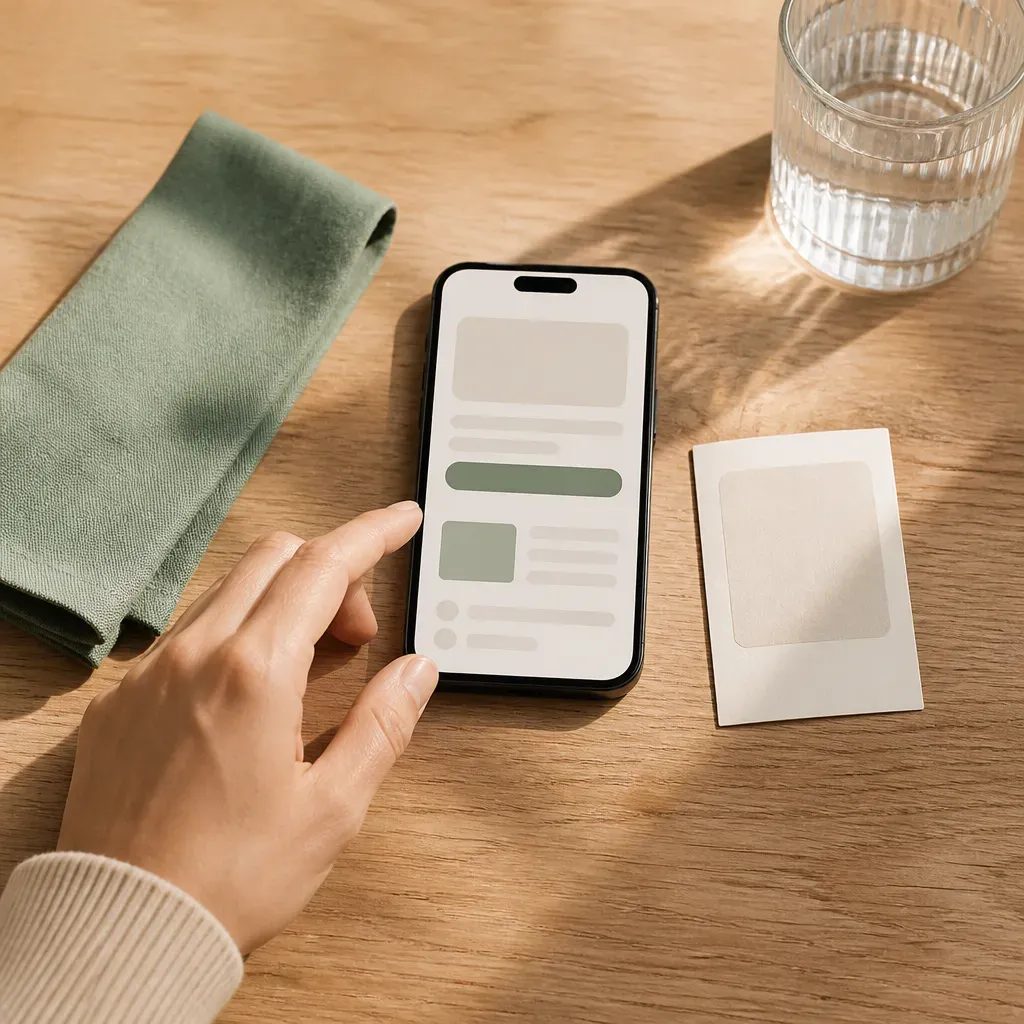
A QR code on the table opens a page in the phone’s browser within a single tap. The first screen should answer three questions: what is available, what is on offer right now, and how close the guest is to a reward. Anything beyond that belongs on a secondary view, because each additional screen costs a share of guests who were only planning to order a drink.
Why an app-free page changes the install math
An app asks a guest to find, download, install, create an account, and then remember to open it. Each step loses guests, and an occasional visitor will rarely return to an app they installed once. A browser page reached from a scan removes the first three steps, which matters most for the one-time guests a winter café needs to convert.
Where QR experiences fail on the table
Three failure modes recur. Codes printed with low contrast or glossy finishes fail to scan under café lighting, so print size and finish should be tested under the actual lamps. Pages that require registration before showing the menu lose guests who only wanted a drink. Pages that load slowly on congested mobile networks are closed before the first image appears, so they should be tested on throttled connections rather than only on office Wi-Fi.
Loyalty Offers That Fill Quiet Hours
Loyalty mechanics work when they change the decision on a specific visit. Blanket discounts usually fail that test, because they reach guests who would have come anyway. The more useful question is which guests are missing from the slow slots, and what would bring them in on that day.
Scoping offers to empty dayparts
A blanket discount applies to guests who would have come during peak hours anyway, which is why it costs margin and does little for occupancy in slow hours. An offer scoped to one weekday and one daypart, such as a Tuesday mid-afternoon bundle, targets the exact slots that are empty and leaves peak revenue untouched. Scope every winter offer to a single slot for the first test period.
Point thresholds a guest can reach
Loyalty points influence the next visit only when the next reward is close enough to matter. A threshold that needs ten visits is ignored after the first month. Set the first redemption at one or two visits, and display the balance on both the guest page and the in-venue screen so the guest sees progress without asking staff.
Loyalty mechanics do not create demand. They make a guest who already intends to visit choose this café on a slow day.
Measuring redemption against the baseline
Compare redemptions per slot with the same slot in the prior four weeks, not with total monthly visits. If the offer is working, the targeted slot rises while peak slots stay flat. If peak slots also rise, the offer is subsidising demand that already existed, and its scope should be narrowed.
Pro tip: Set a fixed end date on every winter offer. Open-ended offers cannot be measured against a baseline, and they tend to become permanent discounts by default.
Interactive Screens and Music Interaction Inside the Venue
An interactive screen earns its place when it answers a guest question: what is available, what is the current offer, and how close is the next reward. Rotating brand banners give the room nothing to act on, and stale content signals neglect. A screen works only when it shows the same information as the guest page, so both need the same update schedule.
Showing live venue state rather than a slideshow
Screen content needs a named owner who updates offers and menu items on the same schedule as the guest page. When the two drift apart, a guest who sees one offer on the table and a different one on the wall loses trust in both. Keep the number of content zones on the screen small enough that each one can be read from the seat.
Placement for winter seating
Screens near the entrance reach guests who are still deciding, while screens near the seating reach guests who have already committed. If a corner of the room stays empty through the winter, check whether it sits away from the heat source and the door, then test a screen or an offer aimed at that zone. Mounting height and glare from windows matter more than screen size.
Music interaction as part of the room’s atmosphere
Music interaction is one of the in-venue features Miza offers alongside the screens and the guest page. Its value comes from fitting the room’s atmosphere, so it should be scoped with the venue’s programming rather than set up as a standalone feature. Confirm the exact interaction model with the Miza team before promising it to staff or guests.
Comparing Digital Experience Approaches for a Winter Café
Three approaches cover most of the options a Baghdad café owner will evaluate. They differ less in cost than in the point where each one stops working, and the table below compares them on the criteria that determine winter seat fill.
| Approach | Where It Fills Seats | Main Trade-off |
|---|---|---|
| Standalone mobile app with loyalty | Reaches guests who have already installed the venue app and visit often | Install and account friction stops most one-time guests before any offer is seen |
| Paper loyalty card | Low setup cost and no device requirement | No redemption timing data, easy to lose, and no way to promote a specific slow slot in real time |
| QR guest web experience with offers, points, and screens (ميزة OS approach) | Works on the guest’s existing phone at the table, and offers can target slow slots | Needs a content owner, a lightweight page build, and confirmation of feature scope, since ميزة OS is in active development |
In practice, the choice depends less on which approach is best in general and more on which guest group the café needs to convert. A café with a strong regular base can run a paper card longer than a café whose winter problem is one-time visitors. Each row only works if its content is maintained after launch.
Operating the System After Launch
Most winter digital setups fail after launch rather than at it. The offer expires without a replacement, the menu item is missing from the guest page, or the screen shows last month’s promotion. These failures are operational, and they are preventable with a short set of standing responsibilities.
Assigning content ownership
Assign one owner for offers, one for menu content, and one for screen updates before go-live. Without named owners, the guest page and the screens drift apart within a few weeks. A fixed weekly review of all three is usually enough to keep them aligned through a winter season.
A review cadence through the winter weeks
Review slot-level covers and redemptions weekly. Each review should end with one change, such as narrowing an offer, moving a screen, or adjusting a point threshold. Changing several variables at once makes the results impossible to attribute to any one of them.
Pro tip: Keep a dated change log for offers, screen content, and menu items. Without it, a rise or fall in winter covers cannot be traced to a cause.
Confirming scope before committing a launch date
ميزة OS is a product in active development, so the feature set available at any given time should be confirmed before a launch date is set. Miza focuses on systems that keep running and evolving after launch, which makes the post-launch plan part of the scope rather than an afterthought. Venues that want to scope a QR guest experience, loyalty offers, or in-venue screens for a winter launch can start through the contact section.
Frequently Asked Questions
How long before a winter digital experience shows measurable results?
Allow at least three weeks, and compare each slot against the same weekdays from the four weeks before launch. Shorter windows are dominated by weather and weekday variation, which can mask or mimic an effect.
Do guests need to install an app to use the guest web experience?
No. The guest web experience is opened by scanning a QR code with the guest’s own phone, so nothing is installed. The trade-off is that the browser page must be fast and simple, because it has to hold attention without an app’s persistent presence.
Can the guest experience run in both Arabic and English?
Yes. Miza, a Baghdad-based team, builds Arabic-first interfaces with a polished English version. The default language should follow the venue’s dominant guest mix rather than a fixed setting.
Is ميزة OS ready for every café to deploy?
ميزة OS is a product in active development, so its available features change over time. Confirm the current feature set and the scope for your venue before committing to a winter launch date.
Which offers work best during slow winter hours?
Offers scoped to one weekday and one daypart, with a fixed end date and a redemption rate measured against the same slot in prior weeks. Blanket discounts across all hours tend to subsidise demand the café already has.
Tell us which slot in your café emptied first this winter and what you changed in response.