Baghdad Venue Customer Journey: From Visit to Regular
Map the customer journey Baghdad venue teams can measure, from first visit to repeat guest, with loyalty points, QR access, and retention tracking for Iraq.
Published
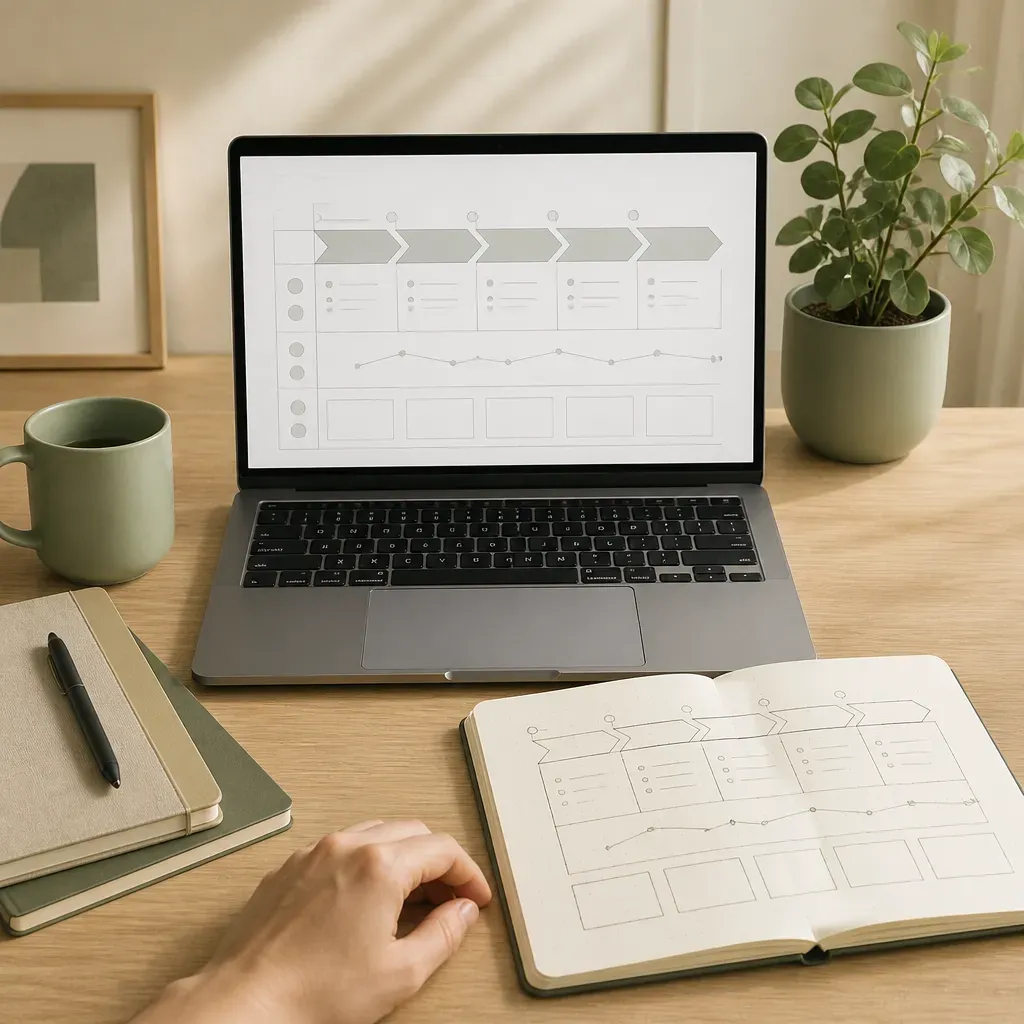
Most venue owners in Baghdad judge a customer by the sale, not by the return visit. A café or gym can serve a first-time guest well and still lose that guest within weeks if nothing in the experience gives a reason to come back. A customer journey that venue teams in Baghdad can actually run treats every touchpoint, from the first search to the fifth visit, as an operational step with an owner, a trigger, and a known failure mode. This article covers how to map that journey, where it leaks, and how loyalty points, QR-based guest access, and post-launch systems keep the guest returning.
Table of Contents
- Quick Takeaways
- Mapping the First Visit Before the Guest Arrives
- Where the Journey Leaks: Friction at Each Touchpoint
- Loyalty Points and Offers That Survive the Till
- The QR Guest Web Experience on the Customer’s Phone
- Interactive Screens and Music as Return Triggers
- Comparing Retention Approaches
- Measuring Retention Inside Your Venue
- Custom Systems for Roles, Data, and Permissions
- Frequently Asked Questions
- References
Quick Takeaways
| Key Insight | Explanation |
|---|---|
| Map the journey from the guest’s side | Start with the search, the map pin, the menu or schedule page, and the first order. Assign one owner and one measurable exit signal to each step. |
| Measure return intent, not only sales | A first visit with no return trigger is a retention gap, even when the ticket size is healthy. |
| Show the reward at the moment of the second visit | Points that appear only in a monthly report do not change behavior. The guest needs to see progress at the table or counter. |
| Remove the app install as a precondition | A web experience opened from a QR code on the guest’s own phone avoids the install step, where many first-time guests drop out. |
| Treat front-line staff as a journey stage | Staff decide whether the loyalty prompt happens. Write the prompt into the order flow so the system asks and the record stays complete. |
| Publish one offer rule set per venue | Conflicting offers across channels teach guests to wait for discounts. Enforce a single rule set in the system, not in staff memory. |
| Review cohorts, not totals | Compare first-visit cohorts against return rates over the same windows so changes in menu, staffing, or offers are visible. |
Mapping the First Visit Before the Guest Arrives
The part of the customer journey that venue operators in Baghdad control starts before the guest walks through the door. The EHL Insights guide on hotel journey mapping frames the exercise around reducing lost leads and generating direct bookings, and the same logic applies to a café, gym, or event venue. Every point where a prospective guest decides whether to act is a point where the journey can fail.
The Hospitality Net guide makes the basic case directly: mapping out the customer journey is an integral step for understanding the different points of contact you have with the guest. In most venues, those contacts are digital before they are physical. The website, the menu page, and the booking channel are therefore part of the journey, not a marketing afterthought.
Defining Entry Points and Their Owners
For each entry point, record who owns it and what a successful outcome looks like. A café’s menu page, for example, needs an owner in operations or marketing and a success signal such as a completed order or a confirmed table. If the menu page has no owner, prices and hours drift, and guests arrive expecting something the venue no longer offers.
The most useful map has one row per touchpoint and three columns: the guest’s expectation, the venue’s response, and the signal that confirms the step worked. Keep the map limited to the journey as it actually runs. A map with many steps that nobody maintains is less useful than a short map that staff check every week.
Capturing the Guest Record at First Contact
The first visit is the only moment when the guest has not yet given the venue any information, so the capture must be lightweight. A phone number tied to a QR scan, a booking, or a first order is enough to link later visits. Long forms at the door reduce completion, and staff will skip optional fields once they slow the queue.
Duplicate records are the common failure here. The same guest appears under a phone number, a name, and a table reference, and the return rate is understated. Define one primary identifier per guest and enforce it at the point of capture.
Pro tip: Attach the guest record to the first completed order, not to a separate sign-up form. Guests who have just been served are more willing to share a phone number, and the record exists before the first friction point appears.
Where the Journey Leaks: Friction at Each Touchpoint
Most first-visit losses happen between intent and action. A guest who finds the venue but cannot confirm opening hours, or who reaches a booking page that requires an installed app, leaves without producing any signal you can see. The EHL guide treats lost leads as the core cost of an unmapped journey, and the leak is usually a small, repeated friction rather than one large failure.
Track the leak by step. Compare menu or schedule page views against completed orders or bookings over the same date range. A large gap with stable traffic points to the page itself, not to the marketing that brought the traffic.
Drop-off Between Intent and First Order
Mobile pages that load slowly on variable signal are a frequent cause of abandonment. A menu that takes long to render, or a booking form with more fields than the guest needs, loses people who were already decided. Measure time to first usable screen on a mid-range phone, not on the office network.
Unclear pricing is the second cause. Guests who cannot tell what a typical visit costs often assume the price is high and leave. Show a typical order range on the menu page and link it to the current offer.
Friction Inside the Venue
Inside the venue, friction shows up as waiting time, unclear ordering, and staff who do not know the guest’s history. A returning guest who has to repeat a preference is a retention risk, not a minor inconvenience. Each service interaction should either add to the guest record or use what the record already contains.
A journey that works is one where the guest never has to repeat a step the venue already knows about.
Staff workflow is the other source of leakage. If the loyalty prompt is a verbal script that only some staff remember, data coverage will look random in reports and the team will draw the wrong conclusions. Write the prompt into the order flow so the system asks and the staff member confirms the answer.
Loyalty Points and Offers That Survive the Till
Loyalty points change behavior only when the guest can estimate the next reward. A simple rule, such as points per amount spent with a fixed threshold for a free item, is easier to understand than tiered systems with several multipliers. Keep the earn rate and the redemption threshold stable for at least one full review cycle before changing either.
Coffee shop loyalty programmes are usually described as a way to turn occasional customers into regulars, and the mechanism is the same in Baghdad. The program works when the next visit feels closer to a reward than the last one did. A rule that the guest cannot explain in one sentence will not produce that feeling.
Designing a Point Rule the Guest Can Predict
Publish the earn rule where the guest orders, not only in a terms document. If a guest cannot see the balance and the next reward at the moment of payment, the points do not influence the choice of the next visit. The balance should be visible on the receipt or on the guest’s web page.
Expiry rules need the same discipline. Points that expire without notice create complaints and erode trust in the program faster than a low earn rate does. State the expiry window and send a reminder before it closes.
Offers That Do Not Erode Margin
Offers should be tied to a repeat-visit goal, not to general discounting. A second-visit offer for a guest who has ordered once is a retention tool. A blanket discount for all guests during a slow hour trains the local market to wait for the discount before it buys.
Define each offer with an eligibility rule, an expiry date, and a cap on redemptions per guest. Without the cap, a small group of frequent guests absorbs most of the budget, and the report looks like growth when it is largely transfer from full-price visits.
Pro tip: Set a per-guest redemption cap before launch rather than after the first month. Retrofitting caps is harder because guests who already redeemed will question any change to their balance.
The QR Guest Web Experience on the Customer’s Phone
Requiring an app download as the entry to loyalty adds friction at the point of highest intent. A guest who scans a QR code and lands on a web page can view the menu, the offers and the points balance in one session without installing anything. This is the approach behind the guest web experience in MizaOS (ميزة OS), a product in active development at Miza, so the flow is expected to change as real usage data comes in.
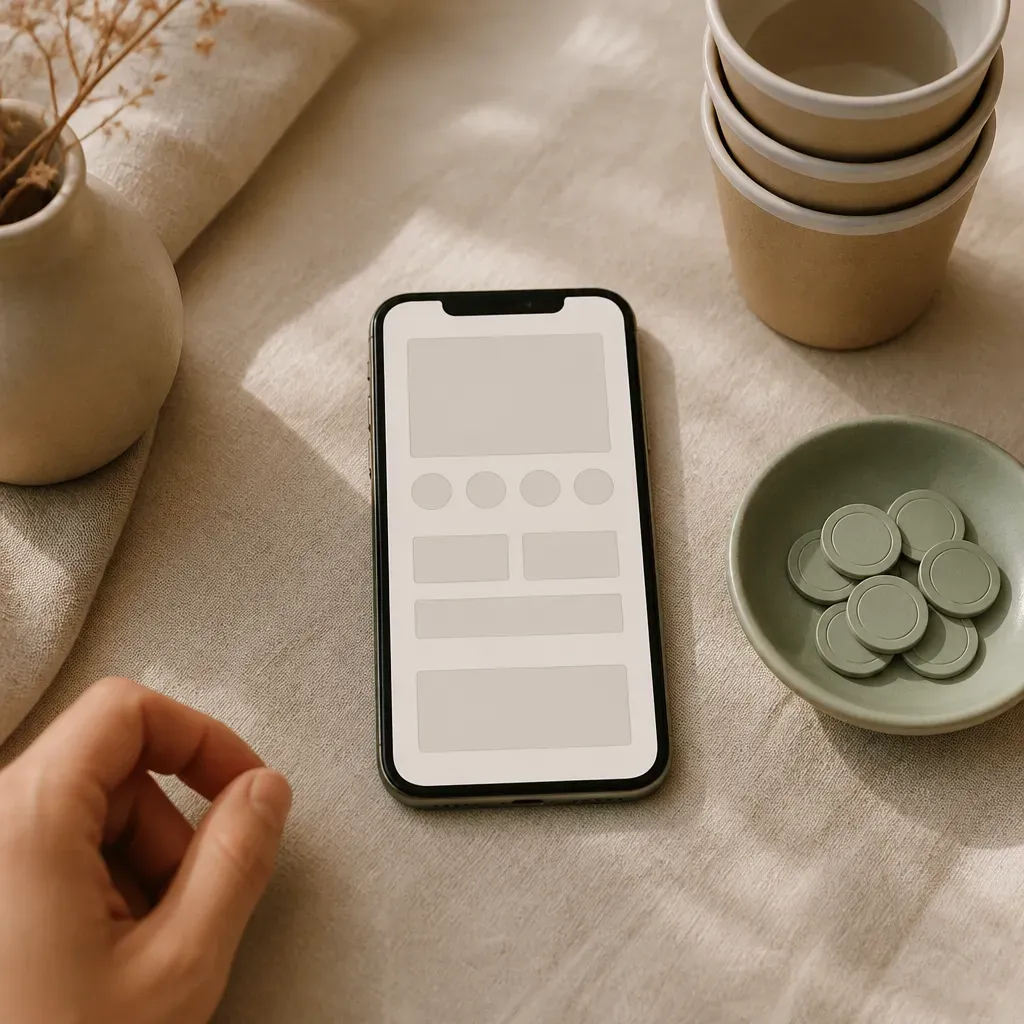
The venue digital experience works best when the code is treated as a route, not a decoration. Each code should land the guest on the page that matches their stage. A first-time guest needs the menu and the welcome offer, while a returning guest needs the points balance and the next reward.
Page Weight, Arabic Layout, and Failure Modes
Guests in a crowded venue often use mobile data with variable signal, so page weight matters. Keep the first screen light, load the points and offer content before decorative media, and test both Arabic and English layouts at common mobile widths. A right-to-left layout that breaks inside the points card removes trust at the exact moment the guest is deciding whether to return.
A common failure is a QR code printed on a table that points to a generic homepage. The guest scans, sees nothing relevant, and leaves. Audit every printed code once a month, because menus, table cards, and window stickers tend to drift from the destinations they were created for.
Interactive Screens and Music as Return Triggers
Interactive screens in a venue are useful when they show a state change: the points balance, the next reward, or the current offer. A static screen that repeats the menu serves the same function as a printed board and does little for retention. The screen should answer what the guest can do next, and the answer should be readable from the seat.
Screens must stay synchronized with the offer rules. A screen that advertises an expired offer damages trust faster than having no screen at all, because the guest has no reason to believe the next offer on the screen is real.
Screens That Show the Next Reward
Place a single call to action on each screen, and make it specific: the points needed for the next free item, or the offer valid for the current hour. Multiple competing messages on one display reduce the chance that any one of them is read. Rotate content on a schedule that staff can verify.
Screens should also be tested for legibility at the distance where guests actually sit. A message that reads well from the design workstation may be unreadable from a corner table.
Music Interaction as a Visit-Length Signal
Music interaction, where guests influence what plays, is best treated as an engagement feature rather than a loyalty mechanism. It can extend time in the venue and give staff a natural opening for conversation. It does not, by itself, create a return visit.
Tie any in-venue music prompt to a recorded action, such as a points award for participation. That makes the feature measurable. Without the link, the venue sees engagement counts with no way to connect them to repeat behavior.
Pro tip: Run in-venue prompts on a fixed schedule for two weeks, then switch them off for one week. The difference in return visits between those windows is a more honest signal than the prompt’s raw engagement count.
Comparing Retention Approaches
Venues in Baghdad typically choose between three retention mechanisms. The right choice depends on the guest’s visit frequency, the venue’s staffing model, and how much data the team needs to maintain. The table compares them on the trade-offs that matter after launch.
| Approach | Where It Works | Where It Breaks |
|---|---|---|
| Paper stamp card | Low setup cost and no technical dependency. Suitable for a single counter with a narrow menu. | No guest record, so return rate cannot be measured. Cards are lost, duplicated, or forgotten, and staff handle redemption manually. |
| App-based loyalty requiring install | Strong recall for guests who visit several times a week and already use a specific app. | Install and login friction at first visit. Most first-time guests will not complete the step, so the program reaches only existing regulars. |
| Web guest experience opened by QR code | No install required, with a guest record created from the first order. Works across devices if pages are built lightweight and tested in Arabic and English. | Depends on printed codes being routed correctly and on mobile signal quality. Requires a monthly audit of codes and destinations. |
The table is a simplification. In practice, a venue may run a paper card during a pilot and migrate to a web experience once the staff routine is stable. The migration itself is a risk, because guests holding paper cards need a clear rule for how their existing progress is honored.
Measuring Retention Inside Your Venue
Customer retention that operators in Iraq can act on requires a measurement model that separates new guests from returning ones. Total revenue hides retention, because a busy month can conceal a shrinking base of repeat guests. The metrics below are designed to show whether the journey changes are working.
Cohorts Instead of Totals
Group guests by first-visit month, then track the share who return within a fixed window. Comparing cohorts across months shows whether a change in menu, staffing, or offer improved the second visit, rather than only raising the monthly total. Keep the window constant so the comparison is valid.
Exclude guests who visited only during a promotional period from the baseline. Their return behavior reflects the offer, not the everyday experience, and mixing them in inflates the apparent retention.
Reading Return Rate Against Offer Cost
A return rate is only meaningful against cost. Calculate the redemption cost per returning guest and compare it with the margin on that return visit. A rise in returns that costs more than the margin it brings is a failed program, even if the dashboard looks positive.
Review the figures on the same schedule every month. Changing the review interval makes trends look like improvements or declines that the underlying data does not support.
Custom Systems for Roles, Data, and Permissions
Guest data is useful only if the right people can see and edit it. Front-line staff need to confirm a loyalty prompt, a manager needs to adjust offer caps, and reporting access should be read-only for most roles. Define these permissions before launch, not after the first data incident.
Retention rules change. Offers are retired, rewards are replaced, and eligibility criteria are narrowed after the first quarter. A custom system should let the venue change these rules without a rebuild, and it should record who changed them and when.
Role-Based Access to Guest Data
Separate the roles that create guest records from the roles that redeem rewards and from the roles that view reports. A barista who confirms a point award does not need access to the full guest list. This separation limits misuse and keeps the audit trail readable.
Log every manual override of a points balance. Overrides are often the first sign that a rule is unclear to staff, and the log shows where the process needs a clearer rule rather than more training.
Systems That Keep Running After Launch
Miza is a team that builds custom business systems around daily workflows, including orders, customers, data, and roles and permissions. The team’s focus is on solutions that keep running and evolving after launch. For a venue, that means the first version of the loyalty rules is a starting point, and the operating model must include a plan for changing them.
When choosing a custom system, check whether the venue can change an offer rule, a reward threshold, or a screen message without developer involvement. If every change requires a new release, the venue will keep the first rule set long after it stops working.
Frequently Asked Questions
How many touchpoints should a venue journey map include?
There is no fixed count. Start with the entry points the venue actually uses, which usually include search or social references, the map location, the menu or schedule page, the first order or booking, and the trigger for the return visit. Keep the map to the points that staff can verify every week.
Do loyalty points require a mobile app in Iraq?
Not necessarily. A web experience opened from a QR code avoids the install step, which is often where first-time guests drop out. Test the experience on common mobile devices and on variable mobile data before relying on it.
What is a useful retention metric for a café?
Track return rate by first-visit cohort over a fixed window. Choose the window to match the café’s natural visit frequency, and keep it constant across months so the comparison is valid.
How do you stop offers from eroding margin?
Set an eligibility rule, an expiry date, and a per-guest redemption cap for each offer. Then compare the cost per returning guest with the margin earned on that return visit. If the cost is higher than the margin, retire or redesign the offer.
Should interactive screens replace the printed menu?
No. Screens are most useful when they show state information such as the points balance, the next reward, or the current offer. The menu should remain available in a simpler printed or digital form for guests who need it.
When should a venue move from spreadsheets to a custom system?
Consider a custom system when reporting depends on manual exports, when staff roles overlap in ways that create errors, or when loyalty rules differ between channels. At that point, the cost of inconsistent data usually exceeds the cost of building the system.
Tell us which step of your guest journey breaks first in your venue, and reach the Miza team through the contact section.